VeriFactu delayed until 2027: What changes and what SMEs and freelancers need to know
The Government has approved a new postponement of the entry into force of VeriFactu, the system that regulates how computerized invoicing systems must operate.

Introduction
With this change, companies and professionals will have an additional year to adapt to the regulation and prepare their invoicing tools with greater time and peace of mind.
Below are the key points of the delay, why it occurred, and how it affects SMEs, freelancers, and corporations.
What is VeriFactu and what is its purpose
VeriFactu is the system regulated by Royal Decree 1007/2023, which requires every issued invoice to be recorded securely, unalterably, and traceably using a QR code and a “high invoicing record” communicated to the Tax Agency (Agencia Tributaria) at the time of issuance. Its purpose is to reinforce fiscal transparency and ensure that all transactions accounted for through an Invoicing Computer System (SIF) are correctly tracked.
This record must remain accessible to the Tax Agency, either by sending the information directly or by keeping it under secure conditions.
The rule affects those who use invoicing software, from professional programs to adapted versions of Excel, although those who invoice with Microsoft Word, manually, those covered by the Immediate Information Supply (SII), and residents in the Basque Country and Navarre are excluded.
New effective dates
The Royal Decree-Law approved by the Council of Ministers and communicated in the Official State Gazette (BOE) on December 3rd extends the planned deadlines by one year, so the obligation of VeriFactu is now as follows:
- January 1, 2027: Companies that pay Corporate Tax.
- July 1, 2027: Freelancers and other companies that use computerized invoicing systems.
The postponement has been urgently approved by the Government. However, as is the case with all rules managed this way, the Congress of Deputies must confirm it within 30 days for it to proceed.
Why the implementation is delayed
The postponement responds to several demands:
- Associations of freelancers and SMEs requested more time to adapt, citing software update costs, the need for training, and deficiencies in digital skills.
- The Government and the Ministry of Finance justify the extension as a measure to facilitate an orderly transition and avoid overburdening those who already face multiple administrative obligations.
- Various professional organizations insisted that the uncertainty and continuous changes generated confusion and requested clarification of criteria and implementation before demanding compliance.
Implications for SMEs and freelancers
For most businesses, the new calendar provides additional time to rigorously organize the transition to certified systems. The main effects are:
More time to evaluate and update invoicing software
Many companies were in the process of selecting or adapting tools. The extra time allows for reviewing alternatives, evaluating the free option from the Tax Agency, or calmly migrating to more advanced solutions.
Relief from administrative burden
Representatives of professional groups have stated that the proximity of the previous date generated added pressure. The delay is perceived as a breather, provided it is used to plan correctly.
The obligation remains in force
Although the extension increases the margin, the implementation of VeriFactu is inevitable. Companies and professionals who still work with manual tools must evaluate the leap to certified software or reinforce their record-keeping systems to comply with the requirements of unalterability and accessibility.
Extra time for a more orderly transition
Business organizations agree that the extension of the deadline will only make sense if it is used to clarify obligations, manage the implementation, and reduce the confusion accumulated in recent months.
Therefore, although the new calendar brings peace of mind, it is advisable not to postpone preparation: review internal processes, check with the software provider for compatibility with VeriFactu, and define a transition plan that avoids rushes in 2027.
Accompany, your best ally for VeriFactu in 2027
Although many companies have already invested time and resources to adapt to VeriFactu, that effort is not lost and puts them ahead to face future requirements.
The new postponement offers peace of mind to those who have not yet started, allowing them to analyze options, organize internal processes, and prepare the transition calmly and with sufficient foresight.
If you need support to adapt to the regulation or resolve doubts about invoicing systems, contact Accompany and move forward with confidence.
Frequently asked questions about VeriFactu in 2027
What is the “Initial Billing Record” (“Registro de facturación de alta”) that is communicated to the Tax Agency?
The “Initial Billing Record” (or “Registro de Alta”) is a set of technical data generated by the VeriFactu invoicing software at the moment a invoice is issued. This record includes key information about the invoice and is either sent immediately or made available to the Spanish Tax Agency (AEAT). Its purpose is to ensure the immutability and traceability of the transaction from the outset. It is not an electronic invoice, and it is only sent automatically to the AEAT if the system operates in VeriFactu mode.
Does the VeriFactu system make it mandatory to issue electronic invoices (FacturaE) to private customers?
Not directly. VeriFactu (Royal Decree 1007/2023) establishes that invoicing software used by businesses must be secure and must not allow manipulation of accounting records. It focuses on the company’s internal record-keeping.
This is different from the Electronic Invoice requirement (the “Crea y Crece” Law), which will require invoices to be sent in a specific digital format to other businesses and self-employed professionals. This obligation focuses on the format used to send the invoice to the customer.
Although both regulations aim to digitalise and enhance control, VeriFactu focuses on ensuring that your software records transactions accurately and without alteration, while the Electronic Invoice requirement focuses on how you deliver that invoice to the customer.
What happens if my current invoicing software is not adapted to VeriFactu in time? Are there penalties?
Using invoicing software that does not comply with the RRSIF requirements (or that allows sales to be hidden or manipulated) may lead to penalties of up to €50,000 per financial year for the user, and up to €150,000 per financial year for the software manufacturer or distributor, according to the General Tax Law (LGT).
The software producer must issue a responsible declaration (its own certification) confirming that the programme complies with the regulations; there is no individual approval or certification by the AEAT.
Is there an official list of AEAT-certified software for VeriFactu?
The Spanish Tax Agency will not certify, nor maintain, a list of approved software. It simply defines the model of the responsible declaration and may verify compliance. The responsibility for ensuring that the software meets the technical requirements lies with the software producer or developer. They must issue a Responsible Declaration and provide users with the technical documentation proving compliance. Taxpayers (SMEs or self-employed professionals) must request this documentation from their provider.
What types of transactions are excluded from the VeriFactu obligation, aside from those already mentioned?
In addition to manual systems (Word, Excel without formulas, handwritten books) and taxpayers included in the SII or subject to the Provincial Tax Authorities of the Basque Country or Navarra, the Regulation mainly excludes transactions for which invoicing rules do not require an invoice to be issued or which are documented using specific receipts (as in certain special schemes).
In practice, many taxpayers under the modules regime or solely under the equivalence surcharge are excluded because, in their usual consumer transactions, they are not required to issue invoices.
How will the QR code appear on the invoice, and what information will it contain?
The QR code must appear on the graphic representation of the invoice when it is issued through invoicing software subject to the Regulation. The QR contains a URL from the AEAT and, within it, the issuer’s tax ID (NIF), the invoice number and series, the issue date, and the total amount. Through this URL, the AEAT (and the recipient) can verify the invoice. The hash of the record is used to chain the records together, but it is not encoded as a separate data element within the QR.
What is the “Voluntary Option” for sending information to the AEAT, and how does it differ from mandatory compliance?
The voluntary option consists of operating the system in VeriFactu mode, meaning that billing records are sent to the AEAT at the moment of issuance. If this mode is not chosen, the system is still required to generate and store the records within the software itself, fulfilling all integrity, traceability, and accessibility requirements.
If the VeriFactu mode is chosen, the AEAT takes on the storage of this information, reducing the taxpayer’s obligation to retain it.
Business in Spain
Many business opportunities

Mobility
The free movement of capital, people, goods, and services is a fundamental aspect of a dynamic economy. Spain embraces this principle, promoting open borders to foster trade, investment, and societal integration within the European Union.

Free Trade
The absence of tariffs or other barriers for cross-border economic activities is a key advantage. Spain actively promotes open trade policies to facilitate seamless cross-border transactions and encourage economic growth.

Funding
Access to European programs, funding and low interest rates presents valuable opportunities for growth and development. Spain actively engages in these initiatives to foster economic progress and innovation.
Stable Currency
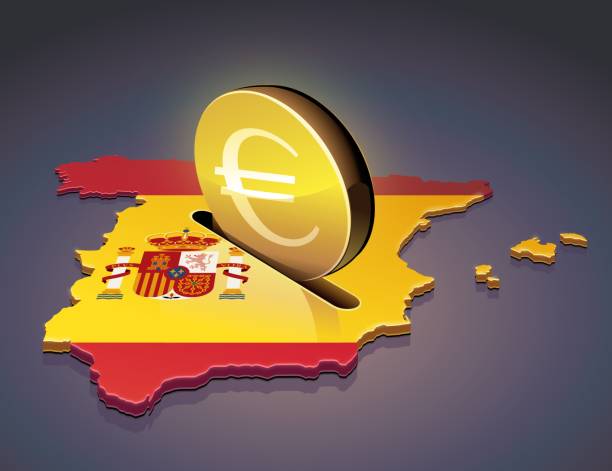
A strong single currency that eliminates exchange rate and inflation risks is a crucial advantage. Spain has committed to maintaining a stable currency to harness these benefits.
VAT Exemption
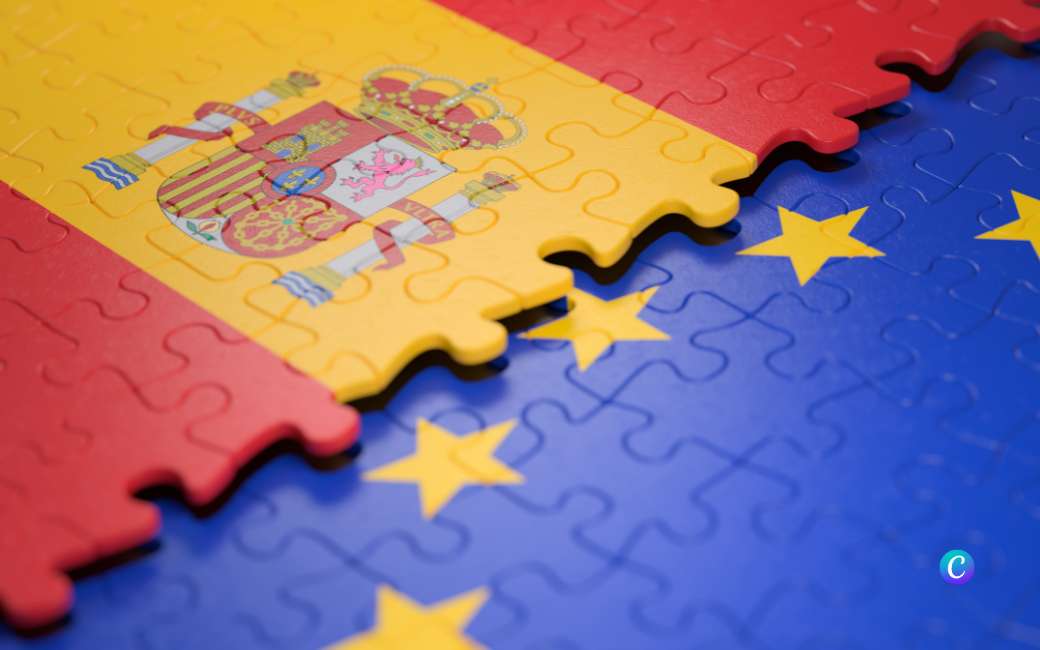
No VAT charged on intra-community transactions is a significant benefit. Spain adheres to this practice, facilitating seamless trade within the European Union.

Infrastructure
Efficient communication and transport networks are vital for facilitating seamless trade and connectivity. Spain has invested in developing robust infrastructure to support these essential functions.